
Using 48V Lithium Batteries in Golf Carts: Capacity, BMS and Charging Guide
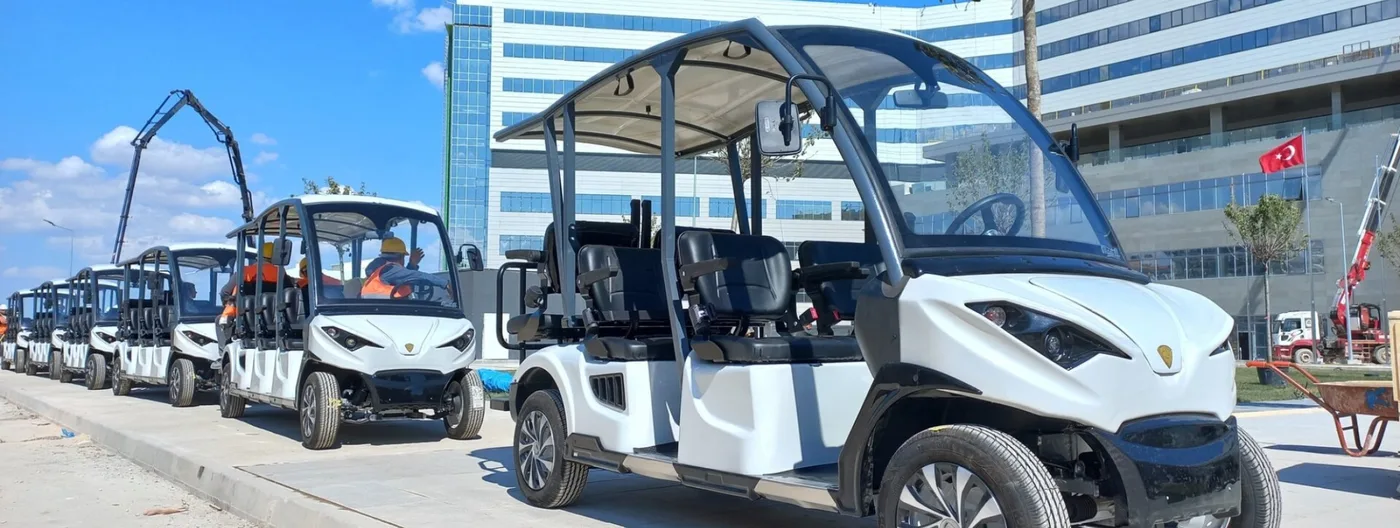
48V electrical systems are widely used in golf carts and light electric utility vehicles.
In hotels, resorts, golf courses and industrial facilities, battery selection directly influences operating range, charging availability, acceleration and long-term reliability.
Traditional 48V golf carts often use several lead-acid batteries connected in series. Today, lithium iron phosphate (LiFePO4) systems offer an alternative for suitable new vehicles and battery conversions.
But can a conventional 48V golf cart use a lithium battery?
Yes. A compatible LiFePO4 battery can be used in certain 48V-class golf carts, provided the complete electrical and mechanical system is properly evaluated.
The replacement battery must meet the vehicle's operating voltage range, continuous and peak current requirements, charging specifications and installation conditions.
This guide explains the technical considerations behind 48V lithium golf cart battery systems.
1. How Does a 48V Golf Cart Battery System Work?
A golf cart battery supplies electrical energy to the motor controller, which regulates the power delivered to the traction motor.
The term 48V describes the nominal voltage class of the vehicle's electrical system.
It does not mean that the battery remains at exactly 48V throughout operation.
Actual battery voltage varies with:
State of charge
Battery chemistry
Charging conditions
Current demand
Operating temperature
Conventional 48V Lead-Acid Configurations
A 48V system may be constructed using:
| Lead-acid arrangement | Nominal voltage |
|---|---|
| Six 8V batteries connected in series | 48V |
| Four 12V batteries connected in series | 48V |
| Eight 6V batteries connected in series | 48V |
When identical batteries are connected in series, their voltages add together while the Ah capacity remains equal to that of one battery.
For example, six 8V 150Ah batteries connected in series form a nominal 48V 150Ah battery bank—not a 900Ah system.
Understanding this distinction is important when comparing replacement batteries.
2. Why Are Some 48V Lithium Batteries Rated at 51.2V?
A typical LiFePO4 cell has a nominal voltage of 3.2V.
When sixteen cells are connected in series:
16 × 3.2V = 51.2V
This arrangement is commonly described as a 16S LiFePO4 system.
Some manufacturers market these products as 48V-class batteries while specifying a nominal battery voltage of 51.2V.
However, not every battery labeled 48V necessarily uses sixteen LiFePO4 cells. Cell chemistry and configuration should be confirmed using the manufacturer's technical documentation.
Are 48V Lead-Acid and 51.2V LiFePO4 Batteries Identical?
No.
Their operating voltage ranges and charging characteristics are different.
For illustration, sixteen LiFePO4 cells with an individual upper voltage limit of 3.65V correspond to:
16 × 3.65V = 58.4V
This mathematical value is not a universal recommended charging voltage. The correct charging limits must be taken from the specific battery manufacturer's instructions.
Before installing a lithium battery, the vehicle's motor controller, auxiliary electrical systems and charging equipment must be compatible with the battery's complete operating voltage range.
3. Benefits of LiFePO4 Batteries in Golf Carts
Properly engineered LiFePO4 systems can offer several advantages.
Usable Energy
Depending on the battery design and operating limits, LiFePO4 systems can make a relatively large proportion of their nominal stored energy available for vehicle operation.
Charging Flexibility
Compatible lithium systems may support opportunity charging during scheduled breaks.
This can be valuable for resort transportation and commercial fleets.
Long Cycle-Life Potential
LiFePO4 batteries can provide longer cycle life than many conventional lead-acid batteries under suitable conditions.
Actual life depends on temperature, charge-discharge conditions, cell quality and system design.
Reduced Routine Maintenance
LiFePO4 batteries do not require electrolyte watering.
However, mechanical connections, electrical protection and BMS-related diagnostics may still require inspection.
Lower Weight Potential
For comparable stored energy, lithium battery systems may be lighter than traditional lead-acid systems.
Any changes to vehicle weight distribution and stability must still be evaluated.
4. How Many Amp-Hours Does a 48V Golf Cart Need?
The correct Ah capacity depends on the vehicle's daily energy consumption.
Battery selection should consider:
Daily travel distance
Passenger and cargo loads
Route gradients
Driving speed
Operating hours
Charging opportunities
Actual vehicle energy consumption
The nominal energy calculation is:
Energy (kWh) = Nominal Voltage (V) × Capacity (Ah) / 1000
Example LiFePO4 Battery Capacities
| Nominal voltage | Capacity | Nominal energy |
|---|---|---|
| 51.2V | 60Ah | 3.07 kWh |
| 51.2V | 105Ah | 5.38 kWh |
| 51.2V | 150Ah | 7.68 kWh |
| 51.2V | 210Ah | 10.75 kWh |
These are illustrative battery configurations and should not be interpreted as a confirmed Mastiff Energy product catalogue.
Actual usable energy depends on the battery's operating limits and BMS configuration.
5. Comparing 105Ah and 210Ah Lithium Batteries
At 51.2V nominal voltage:
A 105Ah battery contains:
51.2 × 10⁵ / 1000 = 5.376 kWh
A 210Ah battery contains:
51.2 × 210 / 1000 = 10.752 kWh
The 210Ah configuration stores twice the nominal energy of the 105Ah configuration.
However, higher capacity is not automatically the better choice.
When Might 105Ah Be Suitable?
A 105Ah-class system may be considered for vehicles with moderate energy demands and frequent charging opportunities.
When Might 210Ah Be Suitable?
A higher-capacity battery may be appropriate for vehicles operating longer distances, extended shifts or with limited charging availability.
The final choice must consider available space, battery weight, charging requirements and discharge current capability.
Ah capacity does not, by itself, define the maximum current a battery can safely deliver.
6. Practical Battery Sizing Example
Consider a resort golf cart traveling 30km per day.
Assume an illustrative battery-side energy consumption of 150Wh/km.
Daily energy demand:
30 × 150 = 4,500Wh = 4.5 kWh
If the battery system is designed around an assumed usable-energy allowance of 85%:
4.5 / 0.85 = 5.29 kWh
At 51.2V nominal voltage:
5,290 / 51.2 = Approximately 103Ah
A 105Ah battery would therefore be very close to the theoretical daily requirement.
However, this leaves almost no reserve for changes in temperature, passenger loads, route conditions or battery aging.
For comparison, a 150Ah system with the same assumed usable-energy proportion provides:
51.2 × 150 × 0.85 = 6.53 kWh
This offers a greater energy reserve under the example conditions.
These figures are mathematical examples, not tested or guaranteed golf cart ranges.
Actual sizing should use measured vehicle consumption and an appropriate reserve.
7. Selecting the Right Battery Management System
A Battery Management System (BMS) is an essential part of a LiFePO4 battery system.
Its functions typically include:
Individual cell voltage monitoring
Temperature monitoring
Charge and discharge current monitoring
Cell balancing
Overcharge protection
Overdischarge protection
Overcurrent protection
Communication with external systems where required
Continuous and Peak Current
Golf carts can require substantial current during acceleration and hill climbing.
For example, at a nominal voltage of 51.2V and a battery current of 150A:
51.2 × 150 = 7.68 kW
This is a simplified battery-side power calculation.
The actual power depends on operating voltage, system losses and motor controller behavior.
The BMS must support the vehicle's continuous and peak current requirements, including permitted peak duration.
An undersized BMS may limit performance or cause protective shutdowns under demanding conditions.
8. Choosing a Compatible 48V Lithium Battery Charger
A LiFePO4 battery requires a charging system compatible with its cell configuration and operating limits.
An existing lead-acid or gel charger should not automatically be reused.
Important checks include:
| Charger characteristic | Requirement |
|---|---|
| Output voltage | Compatible battery charging range |
| Charging current | Within cell and BMS limits |
| Charging algorithm | Appropriate for LiFePO4 |
| Charge termination | Manufacturer-approved control |
| Communication | Compatible where required |
| Temperature limits | Safe charging conditions |
| Connectors | Suitable electrical rating and design |
Charging Time Calculation
Assume that 5kWh must be added to a battery and the charger delivers an average net power of 2.5kW.
5 / 2.5 = 2 hours
This is an idealized calculation.
Actual charging may take longer because of current tapering, temperature limits and BMS restrictions.
Low-Temperature Charging
Some LiFePO4 batteries restrict or prohibit charging at low temperatures.
The actual threshold depends on the specific battery design and its protection settings.
For outdoor and cold-environment applications, the manufacturer's charging temperature specifications must be reviewed carefully.
9. Converting an Existing 48V Golf Cart to Lithium
Some lead-acid or gel-powered golf carts can be converted to suitable LiFePO4 battery systems.
However, the complete vehicle must be assessed.
Motor Controller Compatibility
The controller must support the battery's full operating voltage range.
Current Requirements
The battery must provide sufficient continuous and peak discharge current.
Charger Compatibility
The charging system must meet the LiFePO4 battery's requirements.
Mechanical Installation
Battery dimensions, mounting points, enclosure protection and weight distribution must be suitable.
Auxiliary Electrical Systems
Lights, displays and other accessories may require a DC-DC converter.
The converter must support the replacement battery's operating voltage range.
State-of-Charge Indication
Some traditional golf cart battery indicators estimate charge level from lead-acid battery voltage.
These indicators may not provide accurate readings with LiFePO4 batteries.
A compatible monitoring solution may be needed.
Regenerative Braking
Some motor controllers return electrical energy to the battery during deceleration.
Where regenerative braking is present, the new battery and BMS must safely manage the corresponding charging current.
10. Can Four 12V Lithium Batteries Be Connected in Series?
Some conventional 48V golf carts use four 12V lead-acid batteries connected in series.
This does not mean that any four 12V LiFePO4 batteries can be connected in the same way.
Individual lithium batteries often contain their own BMS.
Before series connection, the manufacturer must explicitly permit:
Series operation
The intended number of batteries
The charging configuration
Protection coordination
Applicable balancing and maintenance procedures
Incompatible battery management systems may cause operating problems or unsafe conditions.
For certain golf cart applications, a purpose-designed integrated 48V-class LiFePO4 battery pack may offer simpler system integration.
The correct solution depends on the vehicle and the battery manufacturer's specifications.
11. Electrical and Mechanical Safety
LiFePO4 chemistry offers favorable thermal stability characteristics, but safe operation still depends on complete battery system design.
Depending on the application, appropriate measures may include:
Overcurrent protection
Short-circuit protection
Correct cable and connector ratings
Secure mechanical mounting
Temperature monitoring
Suitable charging control
BMS protective functions
Contactors and precharge circuits where required
High-capacity battery systems can deliver substantial fault currents.
Battery enclosure modifications, internal cell connections and protective devices should only be handled by qualified personnel.
12. 48V Lithium Batteries for Hotels and Resort Fleets
Commercial golf cart fleets often contain vehicles with different operating profiles.
For example:
Guest transportation vehicles
Security vehicles
Maintenance carts
Internal material-handling vehicles
may have significantly different daily energy requirements.
A fleet-level assessment should include:
Daily distance for each vehicle
Actual energy consumption
Passenger and cargo loads
Route gradients
Charging opportunities
Battery capacity and power requirements
Shared charging infrastructure
This approach helps businesses select appropriate battery capacity for each operating duty rather than installing unnecessarily large batteries in every vehicle.
13. What Determines 48V Lithium Golf Cart Battery Prices?
Battery pricing depends on more than nominal voltage and Ah capacity.
Important factors include:
Energy capacity in kWh
Cell specifications
Continuous and peak current capability
BMS functionality
Battery enclosure
Electrical protection
Communication interfaces
Charging equipment
Testing requirements
Installation and vehicle integration
Two batteries with the same Ah rating may have different power ratings, protection systems and integration requirements.
For commercial operators, the total cost of ownership should also include electricity consumption, maintenance, charging downtime and expected replacement costs.
14. 48V Lithium Golf Cart Battery Checklist
| Specification | Why it matters |
|---|---|
| Vehicle make and model | Compatibility |
| Controller voltage range | Electrical integration |
| Daily energy consumption | Battery sizing |
| Ah and kWh capacity | Available operating energy |
| Continuous and peak current | Drive performance |
| BMS specifications | Monitoring and protection |
| Charger compatibility | Safe charging |
| Battery dimensions | Physical installation |
| Battery weight | Vehicle stability and mounting |
| Cables and connectors | Electrical safety |
| Auxiliary power systems | Accessory compatibility |
| Warranty and service | Long-term reliability |
Frequently Asked Questions
Can I install a 51.2V LiFePO4 battery in a 48V golf cart?
It may be possible in certain 48V-class vehicles. However, the complete operating voltage range must be compatible with the motor controller, charger and other electrical components.
How many amp-hours should a 48V golf cart battery have?
The correct capacity depends on daily energy use, operating conditions and charging opportunities. Different vehicles may require different Ah ratings.
How many kilowatt-hours is a 48V 105Ah lithium battery?
A 16S LiFePO4 battery rated at 51.2V and 105Ah stores 5.376kWh of nominal energy.
Will a 210Ah lithium battery increase golf cart range?
Greater usable energy can increase range, but actual results depend on vehicle consumption, terrain, passenger load and operating conditions.
Can I connect four 12V lithium batteries in series?
Only if the battery manufacturer explicitly permits the intended series configuration and all charging and protection requirements are satisfied.
Can I use the original golf cart charger?
Only if compatibility with the replacement LiFePO4 battery has been technically verified.
Does a 48V lithium golf cart battery require a BMS?
Yes. Suitable cell monitoring and protective functions are essential. They are typically provided through the battery's BMS and complete protection architecture.
Conclusion: Selecting the Right 48V Lithium Golf Cart Battery
LiFePO4 technology can provide meaningful benefits in compatible 48V golf cart applications.
However, choosing a replacement battery requires more than matching voltage and amp-hour capacity.
The battery must provide sufficient usable energy, support the vehicle's continuous and peak current demands, and operate safely with the charging system.
Mechanical installation, weight distribution, auxiliary electrical systems and communication requirements must also be considered.
The right 48V lithium battery is one that meets the vehicle's technical requirements and safely supports its actual daily energy demand.
Looking for a 48V LiFePO4 Battery Solution for Your Golf Cart?
Mastiff Energy focuses on LiFePO4 battery solutions for golf carts and light electric utility vehicles.
Share your vehicle model, existing battery specifications, daily operating requirements and battery compartment dimensions to request a technical assessment.