
Forklift Lithium Battery Conversion: Benefits and Technical Requirements
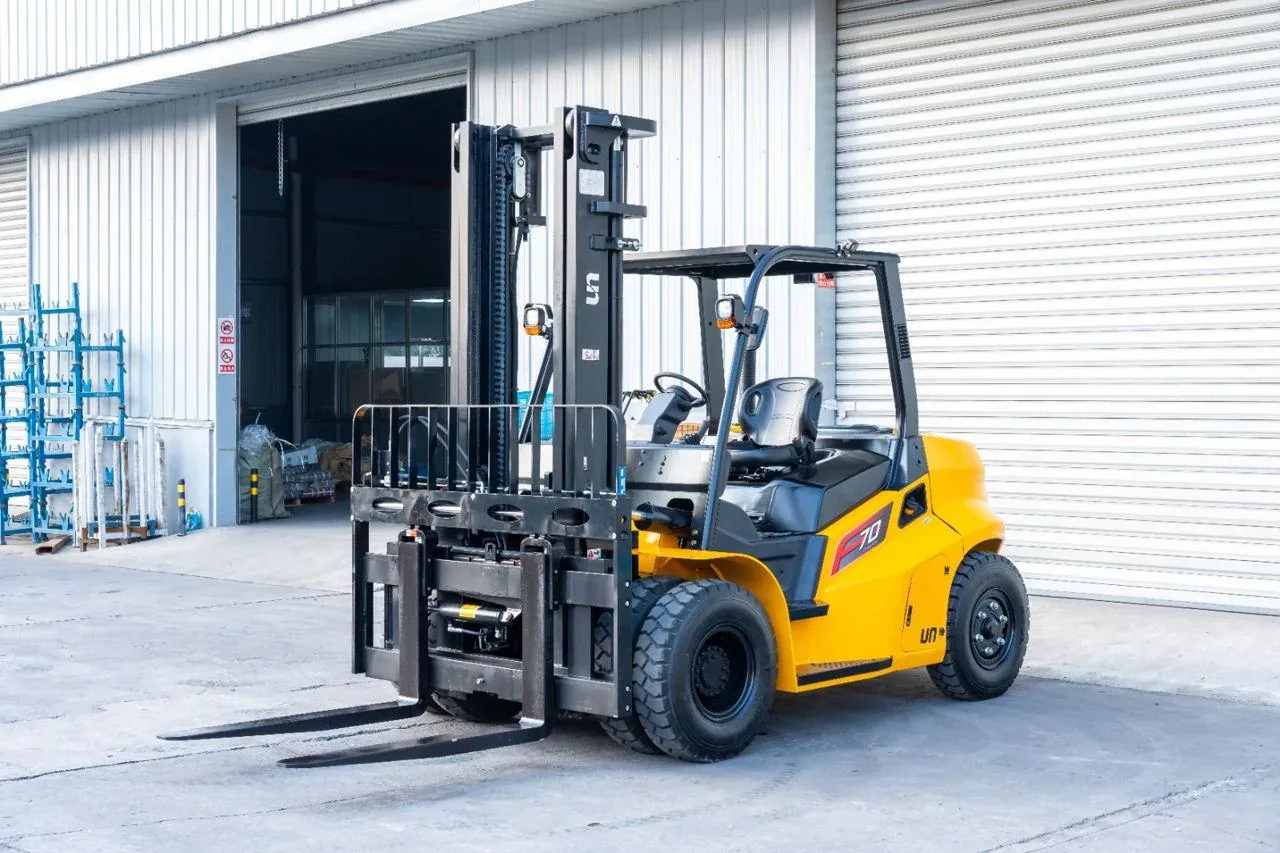
Electric forklifts are essential equipment in warehouses, factories, logistics centers and industrial facilities. Many existing models operate with conventional lead-acid traction batteries.
As battery technology advances, converting these vehicles to lithium iron phosphate (LiFePO4) systems has become an option worth evaluating.
Potential benefits include flexible charging, reduced routine maintenance, high cycle-life potential and improved operational availability.
However, converting a forklift from lead-acid to lithium requires much more than replacing the battery pack.
Voltage compatibility, electrical loads, battery weight, mechanical installation, BMS integration, charging infrastructure and manufacturer requirements must all be considered.
This guide explains the engineering and economic considerations involved in forklift lithium battery conversion.
1. What Is Forklift Lithium Battery Conversion?
Forklift lithium battery conversion is the process of replacing an existing battery system with a compatible lithium-based energy storage solution.
In many applications, this involves evaluating the replacement of a flooded lead-acid traction battery with a LiFePO4 battery pack.
A complete conversion must address:
Operating voltage compatibility
Continuous and peak discharge current
Battery energy capacity
Vehicle stability and battery weight
Mechanical dimensions and mounting
Charger compatibility
BMS functionality
Communication and control requirements
Electrical protection and applicable safety requirements
A lithium battery should not be considered compatible simply because its nominal voltage is similar to that of the original lead-acid battery.
2. Why Convert a Forklift to Lithium?
Flexible charging
Properly designed LiFePO4 systems can support opportunity charging during scheduled breaks.
This can help reduce extended charging downtime in suitable operations.
Reduced routine maintenance
LiFePO4 batteries do not require the electrolyte watering associated with flooded lead-acid batteries.
Electrical, mechanical and electronic inspections may still be necessary.
Long cycle-life potential
Under suitable operating conditions, LiFePO4 cells can offer longer cycle life than many conventional lead-acid designs.
Actual service life depends on temperature, depth of discharge, current levels, cell quality and system design.
Energy efficiency
LiFePO4 systems can provide high charging and discharging efficiency, potentially reducing electricity consumption over extended operating periods.
The financial benefit depends on the facility's actual energy usage and operating conditions.
3. Can Every Electric Forklift Be Converted to Lithium?
Not every forklift is suitable for lithium battery conversion.
The vehicle's electrical platform, mechanical construction, stability requirements and manufacturer specifications must be assessed.
| Technical factor | Required evaluation |
|---|---|
| Voltage | Full battery operating voltage range |
| Continuous current | Normal electrical load requirements |
| Peak current | Acceleration and lifting demands |
| Battery weight | Vehicle stability requirements |
| Dimensions | Physical installation compatibility |
| Charger | Correct lithium charging profile |
| BMS | Monitoring and protection functions |
| Communication | Vehicle and charging interfaces |
| Safety | Electrical protection and compliance |
Where conversion affects vehicle capacity or safe operation, appropriate manufacturer approval, engineering assessment and applicable regulatory requirements must be addressed.
4. Voltage Compatibility Between Lead-Acid and LiFePO4
Traditional lead-acid traction cells have a nominal voltage of approximately 2V.
LiFePO4 cells typically have a nominal voltage of 3.2V.
For example, a conventional 48V lead-acid battery may contain 24 cells connected in series.
A lithium battery containing 16 LiFePO4 cells in series provides:
16 × 3.2V = 51.2V
A 51.2V LiFePO4 system may be suitable for certain 48V-class forklifts.
However, the charging and discharging voltage ranges are not identical.
Compatibility must be verified across:
Maximum battery voltage
Minimum operating voltage
Motor controller requirements
Vehicle protection thresholds
BMS voltage limits
Charger output characteristics
Matching nominal voltage classes alone does not guarantee compatibility.
5. How to Determine the Required Lithium Battery Capacity
Battery conversion should be based on usable energy requirements rather than simply matching the original Ah rating.
The basic nominal energy calculation is:
Energy (kWh) = Nominal Voltage (V) × Capacity (Ah) / 1000
Example: Existing Lead-Acid Battery
A 48V 500Ah lead-acid battery has a calculated nominal energy of:
48 × 500 / 1000 = 24 kWh
Example: Proposed LiFePO4 Battery
A 51.2V 400Ah LiFePO4 battery has:
51.2 × 400 / 1000 = 20.48 kWh
These nominal energy values are different.
However, actual usable energy depends on battery chemistry, operating limits, discharge characteristics and system conditions.
Example: Sizing Based on Daily Energy Consumption
Assume a forklift consumes 15 kWh of battery energy per day.
If the new LiFePO4 system is designed around an illustrative usable-energy allowance of 80%:
15 / 0.80 = 18.75 kWh
At 51.2V nominal voltage:
18,750 / 51.2 = Approximately 366Ah
This is a simplified sizing example, not a final battery recommendation.
Actual sizing must include current requirements, temperature effects, aging allowance, energy reserves and charging opportunities.
6. Battery Weight and Forklift Stability
Battery weight is one of the most important considerations in forklift lithium conversion.
LiFePO4 cells generally provide higher energy density than lead-acid cells.
As a result, a lithium battery system may be lighter for a comparable energy requirement.
However, battery mass contributes to stability characteristics in certain forklift designs.
Replacing a heavy traction battery with a substantially lighter battery can affect vehicle safety.
The assessment must consider:
Minimum and maximum permitted battery mass
Center of gravity
Battery enclosure design
Mechanical mounting
Vehicle stability
Manufacturer requirements
Any required weight adjustment should be determined through an appropriate engineering process and applicable manufacturer approval.
7. Mechanical Integration and Battery Enclosure Design
A replacement battery must fit safely into the forklift's battery compartment.
Important design considerations include:
Length, width and height
Battery mass distribution
Electrical connector locations
Cable routing
Mechanical retention
Lifting provisions
Vibration resistance
Electrical insulation
Environmental protection
Maintenance access
The battery enclosure must support reliable operation under the expected industrial conditions.
Simply fitting a battery into the available compartment is not sufficient to establish safe mechanical integration.
8. Why Is the BMS Essential?
A Battery Management System supports safe operation by monitoring and managing key battery parameters.
Typical BMS functions include:
Cell voltage monitoring
Temperature monitoring
Charge and discharge current monitoring
Cell balancing
Overcharge protection
Overdischarge protection
Overcurrent protection
Communication with other equipment where required
Industrial forklifts can demand substantial peak current during acceleration and lifting.
The BMS and complete battery system must be able to support these loads without inappropriate power interruption.
A high Ah rating alone does not guarantee adequate discharge-current capability.
9. Vehicle Communication and CAN Integration
Some modern forklifts exchange information with the battery system through CAN-based communication.
Depending on the vehicle architecture, transmitted information may include:
State of charge
Battery voltage
Current measurements
Temperature
Available power limits
Fault conditions
Charging requests
However, the presence of a CAN interface does not guarantee protocol compatibility.
The required messages, control behavior and fault-handling strategy must be verified.
This is particularly important when replacing an original battery system that communicates with the vehicle controller.
10. Can the Existing Forklift Charger Be Used?
A lead-acid charger is not automatically suitable for a LiFePO4 battery.
Charging systems must be compatible with the battery's chemistry, voltage range, current limits and control requirements.
| Charger characteristic | Compatibility consideration |
|---|---|
| Output voltage | Correct lithium charging range |
| Charging current | Cell and BMS limits |
| Charging algorithm | Appropriate battery chemistry |
| Communication | Required control interface |
| Temperature management | Safe charging conditions |
| Connectors | Mechanical and electrical compatibility |
Some lead-acid charging profiles include elevated-voltage equalization stages that are unsuitable for LiFePO4 systems.
Existing chargers should only be reused after compatibility has been verified.
11. Electrical Protection and Safety Requirements
Industrial battery conversion involves multiple safety considerations.
Depending on system architecture, the engineering assessment may include:
Main overcurrent protection
Contactors and switching devices
Precharge circuits
Emergency shutdown functions
Cable and connector ratings
Insulation requirements
Temperature protection
Regenerative braking current management
Fault detection and response
Some electric forklifts return energy to the battery during regenerative braking.
The replacement battery and control system must appropriately manage this energy flow.
A battery conversion should be performed by qualified personnel with the necessary engineering, safety and manufacturer assessments.
12. The Forklift Lithium Conversion Process
A structured conversion project generally includes the following stages.
Stage 1 – Vehicle assessment: Review forklift specifications, original battery information and charging equipment.
Stage 2 – Energy analysis: Determine actual energy consumption, operating hours and available charging periods.
Stage 3 – Compatibility review: Assess voltage, current, battery weight, dimensions and manufacturer requirements.
Stage 4 – Battery system design: Determine an appropriate LiFePO4 configuration, BMS and protection architecture.
Stage 5 – Integration design: Evaluate the enclosure, mechanical mounting, electrical connections and communication interfaces.
Stage 6 – Charging system evaluation: Select or verify compatible charging equipment.
Stage 7 – Testing: Validate relevant electrical protection, battery operation, charging behavior, communication and vehicle integration.
Stage 8 – Documentation: Complete the required technical records, operating instructions and applicable compliance documentation.
The vehicle should not be returned to operation until the necessary safety and compatibility requirements have been satisfied.
13. How Much Does Forklift Lithium Battery Conversion Cost?
The total cost of a conversion depends on more than the battery cells.
Key factors include:
Required battery energy capacity
Continuous and peak current ratings
Battery cell selection
BMS and protection electronics
Enclosure design
Weight and stability requirements
Charging equipment
Electrical connections
Communication integration
Engineering and installation work
Testing and verification
For this reason, reliable pricing requires information about the existing forklift and its operating requirements.
14. Is Lithium Conversion Economically Worthwhile?
A technically feasible conversion is not always the most economical option.
Businesses should evaluate:
| Factor | Economic consideration |
|---|---|
| Initial investment | Complete lithium battery system |
| Conversion work | Mechanical and electrical modifications |
| Charging infrastructure | Charger and electrical upgrades |
| Energy consumption | System efficiency |
| Maintenance | Routine service requirements |
| Downtime | Equipment availability |
| Battery replacement | Expected service-life differences |
| Technical support | Long-term service costs |
Lithium systems may provide significant advantages in intensive, multi-shift operations.
However, an existing lead-acid system may remain economically attractive in certain low-utilization applications.
A realistic total cost of ownership analysis should use the facility's actual operating data.
15. Which Businesses May Benefit Most?
Multi-shift manufacturing facilities
High utilization can increase the value of charging flexibility and reduced battery-related downtime.
Warehouses and logistics centers
Continuous material-handling operations may benefit from properly designed charging schedules.
Large forklift fleets
Fleet-level energy management can help optimize electricity consumption, maintenance requirements and equipment availability.
Businesses replacing aging batteries
When a conventional traction battery approaches the end of its service life, comparing a new lead-acid battery with a compatible lithium conversion may be worthwhile.
Technical compatibility must always be established before an economic decision is made.
Frequently Asked Questions
Can any forklift be converted to lithium?
No. Electrical, mechanical, stability, control-system and manufacturer requirements must be evaluated.
Can a 51.2V lithium battery replace a 48V lead-acid battery?
It may be suitable for certain 48V-class vehicles, provided the full voltage range and system compatibility are verified.
Does lithium conversion increase forklift lifting capacity?
No. Battery conversion does not automatically increase the manufacturer's rated lifting capacity. Changes in battery weight may affect vehicle stability.
Can I keep my existing charger?
Only if the charger has been verified as compatible with the new battery's charging requirements.
Is a BMS necessary?
Industrial LiFePO4 systems require appropriate cell monitoring and protective functions, typically implemented through a suitable BMS and system protection architecture.
Is forklift lithium conversion cost-effective?
It may be, particularly in intensive operations. The decision should be based on actual energy use, charging infrastructure, maintenance costs, equipment compatibility and expected service life.
Conclusion: Successful Conversion Requires Proper Engineering
Converting a forklift from lead-acid to LiFePO4 technology can provide operational advantages in suitable applications.
Potential benefits include flexible charging, reduced routine maintenance and long cycle-life potential.
However, a successful conversion requires comprehensive evaluation of voltage, capacity, battery mass, mechanical design, BMS integration, charging equipment and safety requirements.
Forklift lithium battery conversion is an electrical and mechanical system integration project, not simply a battery replacement.
Considering a Lithium Battery Conversion for Your Forklift?
Mastiff Energy focuses on industrial LiFePO4 battery solutions and application-specific battery engineering.
Share your forklift model, existing battery specifications, battery compartment dimensions and operating requirements to request a technical assessment.