
How to Choose a Golf Cart Battery: Voltage, Capacity and Range Explained
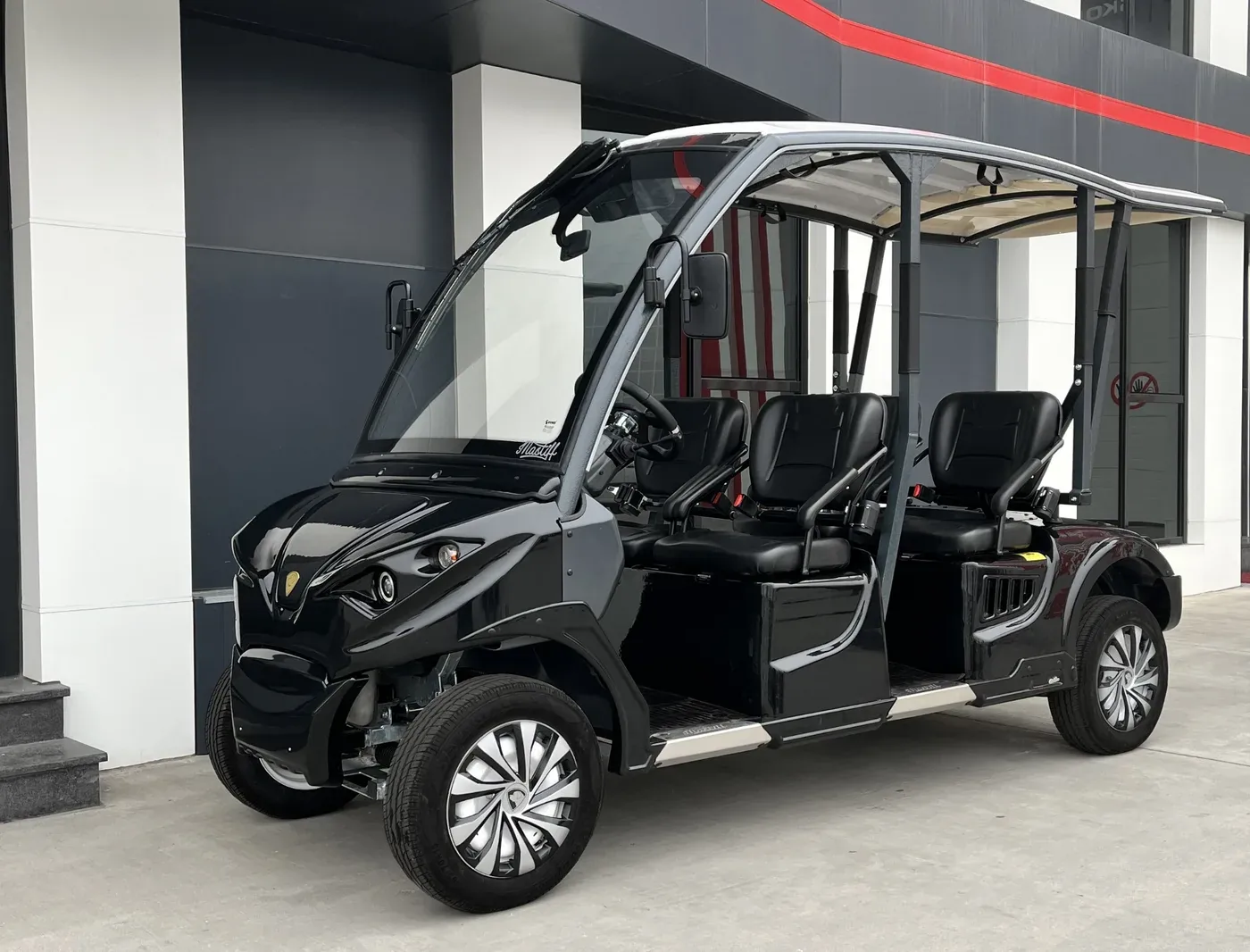
Electric golf carts are widely used not only on golf courses but also in hotels, resorts, industrial facilities, residential communities and private transportation applications.
One of the most important components affecting their performance, operating range and long-term reliability is the battery system.
Selecting the right golf cart battery requires more than choosing a voltage and amp-hour rating.
The battery must meet the vehicle's electrical requirements, deliver sufficient energy for daily operation, support appropriate charging conditions and integrate safely with the motor controller and electrical system.
This guide explains how to evaluate golf cart batteries based on voltage, capacity, energy consumption, range and battery technology.
1. What Types of Batteries Are Used in Golf Carts?
Several battery technologies are used in electric golf carts.
Flooded Lead-Acid Batteries
Flooded lead-acid batteries are a traditional solution for electric golf carts.
They are widely available and generally have a lower initial purchase cost.
However, they require regular maintenance, appropriate charging and electrolyte-level monitoring.
AGM and Gel Batteries
AGM and gel batteries are valve-regulated lead-acid technologies.
They eliminate routine electrolyte watering but require charging profiles suitable for their specific battery design.
AGM and gel batteries should not be treated as identical technologies.
LiFePO4 Lithium Batteries
Lithium iron phosphate batteries offer an alternative for applications requiring high energy efficiency, electronic battery monitoring and reduced routine electrolyte maintenance.
Potential advantages include:
Long cycle-life potential
High energy efficiency
No electrolyte watering
Flexible charging in compatible systems
Electronic cell-level protection
Lower weight for comparable stored energy
However, electrical compatibility and correct system integration remain essential.
2. What Voltage Does a Golf Cart Battery Need?
Golf carts may use 36V, 48V, 72V or other manufacturer-specific electrical systems.
Common examples include:
| Vehicle voltage | Example battery arrangement |
|---|---|
| 36V | Six 6V lead-acid batteries in series |
| 48V | Six 8V lead-acid batteries in series |
| 48V | Four 12V lead-acid batteries in series |
| 48V | Eight 6V lead-acid batteries in series |
| 48V-class lithium | Compatible 51.2V nominal LiFePO4 system |
| 72V | Vehicle-specific battery configuration |
The correct voltage must be determined from the vehicle manufacturer's specifications.
A 48V lead-acid system and a 51.2V nominal LiFePO4 system do not have identical charging and discharging voltage characteristics.
Before replacing a battery, the motor controller, charger, BMS and auxiliary electrical components must be checked.
3. Understanding Ah and kWh in Golf Cart Batteries
Battery capacity is frequently expressed in ampere-hours (Ah).
However, kilowatt-hours (kWh) are more useful for understanding stored energy.
The basic calculation is:
Energy (kWh) = Nominal Voltage (V) × Capacity (Ah) / 1000
Example: 51.2V 105Ah LiFePO4 Battery
51.2 × 10⁵ / 1000 = 5.376 kWh
Example: 51.2V 210Ah LiFePO4 Battery
51.2 × 210 / 1000 = 10.752 kWh
| Battery configuration | Nominal energy |
|---|---|
| 51.2V 60Ah | 3.07 kWh |
| 51.2V 105Ah | 5.38 kWh |
| 51.2V 150Ah | 7.68 kWh |
| 51.2V 210Ah | 10.75 kWh |
These are illustrative battery configurations, not a confirmed Mastiff Energy product catalogue.
Actual usable energy depends on the battery's operating limits, temperature, BMS configuration and condition.
4. How Far Can a Golf Cart Travel on One Charge?
Golf cart range depends on stored energy and energy consumption.
A simplified calculation is:
Range (km) = Usable Battery Energy (Wh) / Average Energy Consumption (Wh/km)
Example: 105Ah Lithium Battery
A 51.2V 105Ah battery stores approximately 5,376Wh of nominal energy.
Assuming 85% of that energy is usable:
5,376 × 0.85 = 4,569.6Wh
If the vehicle consumes an average of 160Wh/km:
4,569.6 / 160 = Approximately 28.6km
Example: 210Ah Lithium Battery
A 51.2V 210Ah battery stores approximately 10,752Wh.
At the same assumed usable-energy ratio:
10,752 × 0.85 = 9,139.2Wh
With the same illustrative energy consumption:
9,139.2 / 160 = Approximately 57.1km
| Battery | Nominal energy | Illustrative range |
|---|---|---|
| 51.2V 105Ah | 5.38 kWh | 28.6km |
| 51.2V 150Ah | 7.68 kWh | 40.8km |
| 51.2V 210Ah | 10.75 kWh | 57.1km |
These are mathematical examples, not tested or guaranteed driving ranges.
All calculations assume 85% usable energy and average battery-side consumption of 160Wh/km.
Actual vehicle range may vary significantly.
5. What Affects Golf Cart Driving Range?
Passenger and Cargo Weight
Additional passengers and cargo increase the energy required for acceleration and climbing.
Terrain and Gradients
Operating on steep roads may require considerably more energy than driving on level ground.
Driving Speed
Higher speeds, frequent acceleration and stop-and-go operation can increase energy consumption.
Tire Pressure and Road Surface
Incorrect tire pressure and high rolling resistance can reduce range.
Temperature
Battery capacity, power delivery and charging performance are affected by operating temperature.
Battery Aging
Battery capacity may decline with use and calendar aging, reducing available energy over time.
A realistic range assessment should consider the vehicle's actual operating environment.
6. Should You Choose a 105Ah or 210Ah Battery?
Battery capacity should be selected according to daily energy demand.
When a 105Ah System May Be Suitable
A 105Ah-class battery may be considered for some vehicles operating shorter daily distances with regular charging opportunities.
Potential applications include light-duty internal transportation and limited-distance resort operations.
Suitability must be verified against real vehicle energy consumption.
When a 210Ah System May Be Suitable
Higher-capacity batteries may be considered for vehicles operating longer routes or extended daily schedules.
Examples may include:
Resort transportation vehicles
Hotel shuttle carts
Large facility transport fleets
Vehicles operating with fewer charging opportunities
However, increasing capacity may affect battery dimensions, weight and charging requirements.
The correct choice should be based on required usable energy and vehicle compatibility.
7. Can a Lead-Acid Golf Cart Be Converted to Lithium?
Some electric golf carts can be converted from lead-acid or gel batteries to compatible LiFePO4 battery systems.
The process requires assessment of:
Operating voltage range
Continuous discharge current
Peak current requirements
Battery compartment dimensions
Battery weight and mounting
Charger compatibility
BMS protection
Motor controller compatibility
Electronic communication, where required
An existing lead-acid charger should only be reused when its compatibility with the replacement battery has been confirmed.
Vehicle safety and manufacturer requirements must also be considered.
8. Why Is the BMS Important?
A Battery Management System monitors and protects lithium battery cells.
Typical functions include:
Individual cell voltage monitoring
Temperature monitoring
Current measurement
Cell balancing
Overcharge protection
Overdischarge protection
Overcurrent protection
Communication with external systems when required
The battery's continuous and peak discharge current capabilities must support the golf cart's acceleration and hill-climbing requirements.
Two batteries with the same Ah capacity may have different power delivery capabilities.
Therefore, battery selection should never be based on Ah alone.
9. How Long Does It Take to Charge a Golf Cart Battery?
Charging time depends on the amount of energy required and the average net charging power.
A simplified calculation is:
Charging Time (hours) = Energy to Be Added (kWh) / Average Net Charging Power (kW)
For example, if 4kWh must be added to a battery and the average power delivered to the battery is 2kW:
4 / 2 = 2 hours
Actual charging time may be longer due to charging limits, battery temperature and current reduction near full charge.
A higher-power charger is only beneficial if the battery and BMS permit the corresponding charging current.
10. What Determines Golf Cart Battery Prices?
Golf cart battery pricing depends on:
Battery chemistry
Energy capacity
Cell specifications
Continuous and peak current ratings
BMS features
Enclosure and mechanical design
Charging equipment
Vehicle integration requirements
Testing and technical support
For commercial operators, total cost of ownership may be more important than the initial purchase price.
Maintenance requirements, charging downtime, energy consumption and expected battery replacement intervals should be included in the evaluation.
11. Battery Selection for Hotels and Resort Fleets
Hotels and resorts often use golf carts for internal transportation, guest services, maintenance and security operations.
Battery selection should consider:
Daily driving distance
Passenger and cargo loads
Route gradients
Number of operating shifts
Available charging periods
Battery condition
Fleet availability requirements
For larger fleets, a coordinated charging and energy-management strategy may improve operational efficiency.
12. Golf Cart Battery Selection Checklist
| Specification | Purpose |
|---|---|
| Vehicle make and model | Compatibility |
| System voltage | Electrical requirements |
| Daily distance | Range planning |
| Energy consumption | Capacity selection |
| Passenger and cargo loads | Power requirements |
| Terrain | Peak current requirements |
| Battery dimensions | Mechanical installation |
| BMS current rating | Reliable power delivery |
| Charger specifications | Safe charging |
| Operating temperature | Performance limits |
| Warranty and service | Long-term reliability |
Frequently Asked Questions
What voltage does a golf cart battery need?
Golf carts may use 36V, 48V, 72V or other electrical systems. The correct voltage depends on the vehicle manufacturer's specifications.
Can a 51.2V LiFePO4 battery replace a 48V lead-acid system?
It may be suitable for some 48V-class vehicles, but voltage range, controller compatibility, BMS and charging requirements must be verified.
How far can a golf cart travel with a 105Ah lithium battery?
Range depends on the vehicle's energy consumption. Under the illustrative assumptions of 85% usable energy and 160Wh/km consumption, a 51.2V 105Ah battery provides approximately 28.6km.
Does a 210Ah battery double the driving range?
At the same nominal voltage, it stores twice the nominal energy of a 105Ah battery. However, actual range does not necessarily double because operating conditions and vehicle weight can change.
Can a golf cart be converted from gel batteries to lithium?
Some vehicles can be converted after verifying electrical, mechanical and charging compatibility.
How long does a golf cart battery last?
Battery life depends on chemistry, operating temperature, charging practices, cycle count, depth of discharge and battery quality.
Conclusion: Choose a Battery Based on Real Energy Requirements
Selecting the correct golf cart battery requires an understanding of voltage, capacity, usable energy and operating conditions.
Ah ratings alone do not determine range.
The complete battery system must provide sufficient energy and current while remaining compatible with the vehicle's electrical architecture and charging equipment.
LiFePO4 technology can provide valuable advantages in suitable applications, but professional system evaluation remains important.
The best golf cart battery is the one that safely meets the vehicle's technical requirements and daily energy demand.
Looking for a LiFePO4 Battery Solution for Your Golf Cart?
Mastiff Energy focuses on LiFePO4 battery solutions for golf carts and light electric utility vehicles.
Share your vehicle model, current battery specifications, operating conditions and daily range requirements to request a technical evaluation.