
What Is a LiFePO4 Battery? Technology, Benefits and Industrial Applications
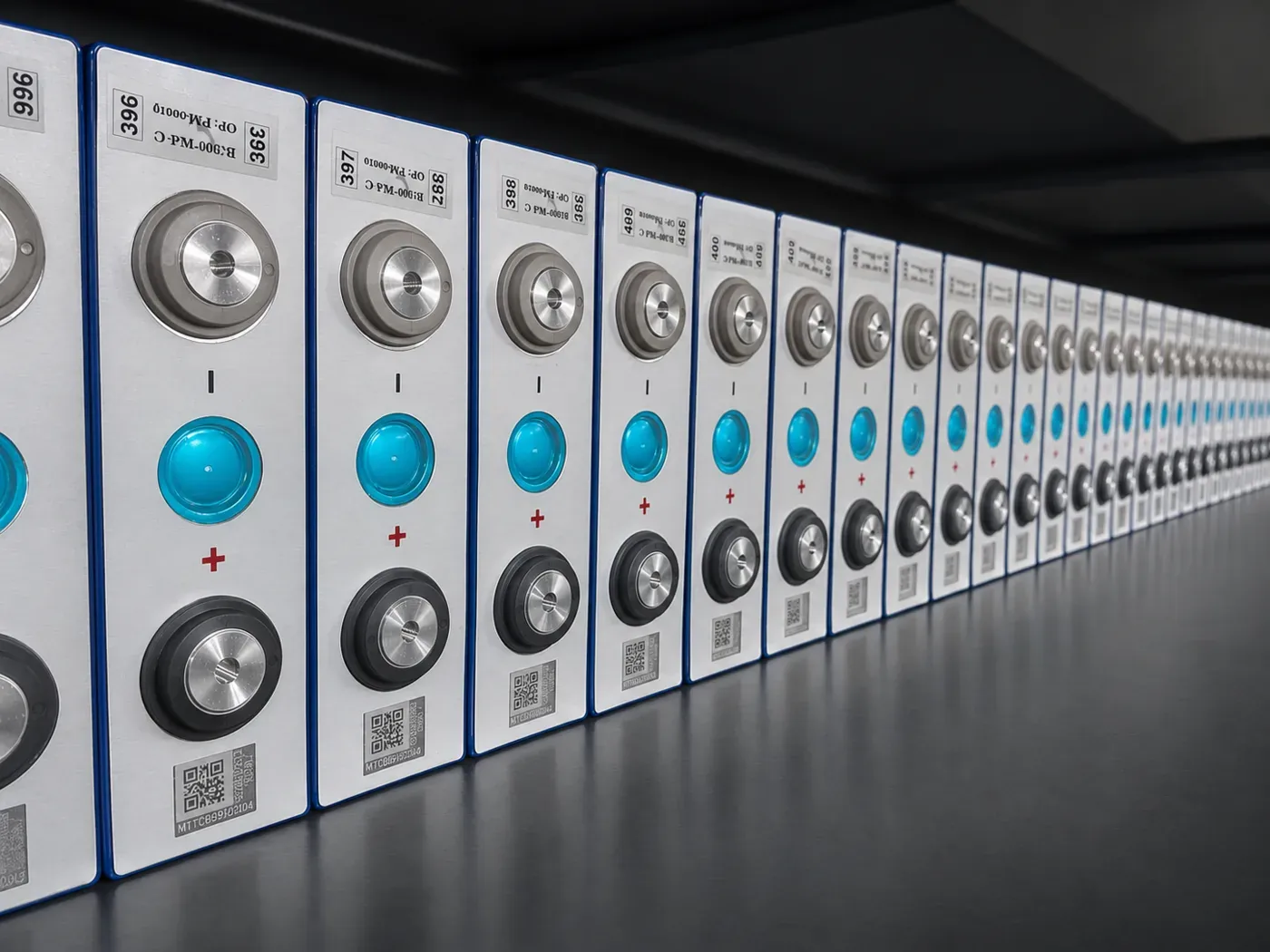
Lithium battery technology plays an increasingly important role in electric vehicles, industrial equipment and energy storage systems.
Among the available lithium-ion chemistries, lithium iron phosphate (LiFePO4 or LFP) is widely recognized for its cycle-life potential, thermal stability and suitability for applications requiring repeated charging and discharging.
LiFePO4 batteries can be used in electric forklifts, golf carts, pallet trucks, industrial machinery and stationary energy storage systems.
But what exactly is a LiFePO4 battery, and how does it differ from other battery technologies?
A LiFePO4 battery is a rechargeable lithium-ion battery that uses lithium iron phosphate as its positive electrode active material.
Its characteristics can make it suitable for many industrial applications, provided the battery cells, management electronics, mechanical structure and charging system are designed correctly.
This guide explains LiFePO4 battery chemistry, electrical specifications, system design and practical applications.
1. What Does LiFePO4 Mean?
LiFePO4 is the chemical formula for lithium iron phosphate.
The formula contains:
Li: Lithium
Fe: Iron
P: Phosphorus
O4: Four oxygen atoms within the phosphate structure
LFP is the abbreviation for lithium iron phosphate.
LiFePO4 belongs to the lithium-ion battery family.
This distinction is important because lithium-ion batteries are not a single battery chemistry.
Other lithium-ion technologies include nickel manganese cobalt oxide (NMC) and nickel cobalt aluminum oxide (NCA).
These chemistries differ in energy density, voltage, thermal behavior, cycle-life characteristics and cost.
LiFePO4 is frequently evaluated for industrial applications where durability, repeated cycling and system reliability are important.
2. How Does a LiFePO4 Battery Work?
A LiFePO4 cell stores and releases energy through the movement of lithium ions between its electrodes.
A typical cell contains:
A lithium iron phosphate positive electrode
A graphite-based negative electrode
An electrolyte that enables lithium-ion transport
A separator that prevents direct contact between the electrodes while allowing ion movement
During Discharge
When the battery supplies an electric motor or other load, lithium ions move internally from the negative electrode toward the positive electrode.
Electrons travel through the external circuit, delivering electrical energy to the connected equipment.
During Charging
An external charger supplies electrical energy to reverse the electrochemical process.
Lithium ions move back toward the negative electrode, allowing the battery to store energy for future use.
These processes can be repeated within the cell's specified operating limits.
3. Main Technical Characteristics of LiFePO4 Cells
| Parameter | Typical characteristic |
|---|---|
| Chemistry | Lithium iron phosphate |
| Nominal cell voltage | Approximately 3.2V |
| Upper charging voltage | Often up to 3.65V per cell, depending on design |
| Capacity | Specified in Ah |
| Stored energy | Nominal voltage multiplied by capacity |
| Cycle life | Depends on cell design and test conditions |
| Current capability | Cell- and temperature-dependent |
| Charging method | Controlled current and voltage |
| Battery management | Suitable BMS and protective systems |
| Operating temperature | Defined by the manufacturer |
The values above describe general technology characteristics.
Actual charging limits, discharge thresholds and current ratings must be taken from the specific cell manufacturer's datasheet.
Nominal voltage should not be confused with the battery's actual voltage throughout operation.
4. Series and Parallel Connections in LiFePO4 Batteries
Industrial battery systems generally contain multiple cells connected in series, parallel or a combination of both.
Series Connections
Connecting cells in series increases the total voltage.
For example:
16 × 3.2V = 51.2V
Sixteen LiFePO4 cells connected in series are described as a 16S configuration.
If each cell has a nominal capacity of 105Ah, the resulting series string has a nominal capacity of 105Ah.
Parallel Connections
Connecting compatible cells in parallel increases capacity while maintaining the same nominal voltage.
For example:
105Ah + 105Ah = 210Ah
Combined Series-Parallel Configuration
A 16S2P configuration contains sixteen series positions, each with two parallel-connected cells.
Using 3.2V, 105Ah cells:
Nominal voltage: 51.2V
Nominal capacity: 210Ah
Nominal energy: 10.752 kWh
This calculation describes nominal electrical capacity.
Actual battery pack design must also account for cell matching, protection, interconnections, current capability, thermal performance and mechanical construction.
5. Common LiFePO4 Battery Voltage Configurations
| Cell arrangement | Nominal voltage | Example applications |
|---|---|---|
| 4S | 12.8V | Auxiliary power and selected energy storage systems |
| 8S | 25.6V | Certain 24V-class industrial applications |
| 16S | 51.2V | Certain 48V-class vehicles and equipment |
| 24S | 76.8V | Certain 72V-class electric vehicle systems |
| Custom configurations | Application-dependent | Industrial machinery and specialized equipment |
These are nominal system voltages.
Compatibility with an existing vehicle or machine must be verified across the entire battery operating voltage range.
A 51.2V nominal LiFePO4 battery, for example, is not automatically suitable for every machine described as a 48V system.
6. How Is LiFePO4 Battery Energy Calculated?
Battery capacity is typically expressed in ampere-hours.
However, stored energy is better represented in watt-hours or kilowatt-hours.
Energy (Wh) = Nominal Voltage (V) × Capacity (Ah)
Or:
Energy (kWh) = V × Ah / 1000
Example: 51.2V 105Ah Battery
51.2 × 10⁵ / 1000 = 5.376 kWh
Example: 51.2V 210Ah Battery
51.2 × 210 / 1000 = 10.752 kWh
Example: 25.6V 200Ah Battery
25.6 × 200 / 1000 = 5.12 kWh
These are nominal energy calculations.
Actual usable energy depends on battery operating limits, state of charge, temperature, discharge rate and BMS configuration.
Equipment runtime should be estimated using usable energy and measured power demand rather than Ah capacity alone.
7. Advantages of LiFePO4 Battery Technology
Long Cycle-Life Potential
LiFePO4 cells can provide longer cycle life than many conventional lead-acid designs under suitable operating conditions.
This may be especially beneficial for equipment that undergoes frequent charge-discharge cycles.
However, cycle-life values depend on testing conditions, including temperature, depth of discharge and end-of-life criteria.
High Energy Efficiency
Properly designed LiFePO4 systems can achieve high charge-discharge energy efficiency.
In intensive industrial operations, reduced energy losses may provide long-term economic benefits.
Reduced Routine Maintenance
LiFePO4 batteries do not require electrolyte watering.
However, electrical connections, mechanical mounting and electronic protection systems may still require periodic inspection.
Opportunity Charging
Compatible LiFePO4 systems may support partial charging during scheduled breaks.
This can be valuable in material-handling equipment and commercial electric vehicles.
Higher Energy Density Than Lead-Acid
LiFePO4 generally offers greater energy density than traditional lead-acid battery systems.
However, it typically has lower energy density than certain other lithium-ion chemistries, including NMC and NCA.
Favorable Thermal Stability
LiFePO4 chemistry offers favorable thermal stability relative to several higher-energy-density lithium-ion chemistries.
Nevertheless, LFP batteries are not inherently fireproof or risk-free.
Complete system protection remains essential.
8. Limitations of LiFePO4 Batteries
Despite their advantages, LiFePO4 batteries have several technical and commercial limitations.
Initial investment: Some LiFePO4 systems have higher upfront costs than conventional lead-acid batteries.
Battery management: Suitable cell monitoring and protective functions are required.
Low-temperature charging: Charging may be limited at low temperatures, depending on the battery design.
Energy density: Some other lithium-ion chemistries offer higher energy density.
System integration: Existing machinery may require charger, controller or communication modifications.
Temperature-related aging: High operating temperatures can accelerate battery degradation.
These limitations should be evaluated alongside the benefits for each intended application.
9. LiFePO4 vs Lead-Acid and NMC Batteries
| Feature | Flooded Lead-Acid | LiFePO4 | NMC Lithium-Ion |
|---|---|---|---|
| Typical nominal cell voltage | 2V | 3.2V | Approximately 3.6–3.7V |
| Energy density | Generally lower | Higher than lead-acid in many designs | Generally higher than LiFePO4 |
| Cycle-life potential | Application-dependent | High under suitable conditions | Cell- and use-dependent |
| Thermal behavior | Different safety considerations | Favorable relative stability | Chemistry- and design-dependent |
| Electrolyte watering | Required | Not required | Not required |
| Electronic cell protection | System-dependent | Required | Required |
| Charging | Lead-acid-specific | LiFePO4-specific | NMC-specific |
These are general technology characteristics, not guaranteed specifications for individual products.
10. Why Does a LiFePO4 Battery Need a BMS?
A Battery Management System monitors and manages important operating parameters.
Typical functions include:
Individual cell voltage monitoring
Temperature monitoring
Charge and discharge current measurement
Cell balancing
Overcharge protection
Overdischarge protection
Overcurrent protection
Communication with external systems where required
In industrial equipment, the BMS may communicate with the charger or motor controller through a CAN interface.
However, communication protocols and control requirements vary between applications.
The BMS must be selected based on cell configuration, current requirements, protective functions and system architecture.
11. What Determines LiFePO4 Battery Life?
Battery life is influenced by both cycle aging and calendar aging.
Cycle aging results from repeated charging and discharging.
Calendar aging occurs over time, even when the battery is not being actively cycled.
Important factors include:
Depth of discharge
Operating temperature
Charging and discharging currents
Extended storage at high state of charge
Cell quality and manufacturing consistency
Cell imbalance
Charging and BMS control strategies
A battery's cycle-life rating should always be evaluated alongside its testing conditions.
A high cycle count does not automatically guarantee a particular number of years in service.
12. Where Are LiFePO4 Batteries Used?
Electric Forklifts
LiFePO4 batteries can supply the traction and auxiliary power requirements of compatible electric forklifts.
Vehicle integration must consider voltage, current, battery weight, charging and communication.
Golf Carts
Golf carts and light electric utility vehicles may use LiFePO4 batteries for propulsion energy.
Range, weight, charging infrastructure and controller compatibility are important.
Electric Pallet Trucks and Stackers
Compact lithium battery systems can be engineered for electric pallet trucks and stackers.
Current delivery and mechanical integration are especially important.
Industrial Machinery
Custom battery packs may be developed for machinery with specific voltage, current, mechanical and communication requirements.
Electric Vehicles
LiFePO4 is used in selected electric vehicle and auxiliary power applications.
The required battery configuration depends on power, energy, weight and safety targets.
Stationary Energy Storage
LiFePO4 is also used in solar energy storage, stationary battery systems and selected backup power applications.
These examples describe the technology's possible applications and should not be interpreted as a confirmed catalogue of all Mastiff Energy products.
13. Important Considerations in LiFePO4 Battery Pack Engineering
Developing an industrial battery system involves much more than selecting cells with the correct nominal voltage.
Cell Selection
Cell capacity, internal resistance, current performance, operating temperature and manufacturer documentation should be evaluated.
Electrical Configuration
Series and parallel arrangements should meet voltage, capacity and current requirements.
Interconnections
Busbars, cables, connectors and joining methods must be designed for the expected electrical and mechanical conditions.
Battery Management
The system requires appropriate monitoring, balancing, protection and communication.
Mechanical Engineering
The battery enclosure should accommodate operating conditions such as vibration, impact, mounting requirements and environmental exposure.
Thermal Design
Cell temperatures must remain within manufacturer-defined limits.
Testing and Verification
Electrical protection, capacity, charging behavior and other applicable requirements should be verified using suitable procedures.
Standards such as IEC 62619 and transport-related UN 38.3 requirements may apply depending on the battery product and intended application.
A reference to a standard does not establish that an individual battery product has been tested or certified.
14. How to Choose an Industrial LiFePO4 Battery
Before purchasing a battery, review:
| Requirement | Why it matters |
|---|---|
| Equipment application | Appropriate battery design |
| Nominal voltage | Electrical compatibility |
| Energy capacity | Required operating duration |
| Ah capacity | Electrical charge capacity |
| Continuous and peak current | Power delivery |
| Cell specifications | Performance and longevity |
| BMS | Monitoring and protection |
| Charger compatibility | Safe charging |
| Operating temperature | Environmental suitability |
| Dimensions and weight | Mechanical integration |
| Test documentation | Safety and technical assessment |
| Warranty and service | Long-term support |
Industrial battery selection should be based on the complete equipment requirements rather than nominal voltage and Ah rating alone.
Frequently Asked Questions
Is LiFePO4 the same as lithium-ion?
LiFePO4 is one type of lithium-ion battery chemistry. It differs from NMC, NCA and other lithium-ion technologies in electrode composition and operating characteristics.
What is the nominal voltage of a LiFePO4 cell?
A typical LiFePO4 cell has a nominal voltage of approximately 3.2V.
How long do LiFePO4 batteries last?
Actual service life depends on cell quality, temperature, depth of discharge, cycle count, charging conditions and calendar aging.
Are LiFePO4 batteries safe?
LiFePO4 chemistry has favorable thermal stability characteristics. However, safety depends on cell quality, BMS, electrical protection, mechanical design and correct operation.
What is the difference between LiFePO4 and gel batteries?
LiFePO4 is a lithium-ion technology, while gel batteries are a valve-regulated lead-acid technology. Their energy density, charging behavior, weight and cycle-life characteristics differ.
Can LiFePO4 batteries charge quickly?
Some LiFePO4 systems support relatively high charging currents with compatible cells, BMS and charging equipment. Charging limits must be verified for each battery.
Does a LiFePO4 battery require a BMS?
Yes. Appropriate cell monitoring and protective functions are essential for the safe operation of a LiFePO4 battery system.
Conclusion: Why LiFePO4 Matters for Industrial Applications
LiFePO4 batteries use lithium iron phosphate chemistry to provide rechargeable electrical energy storage.
Their cycle-life potential, energy efficiency and thermal characteristics make them suitable for evaluation in many industrial applications.
However, battery performance depends on more than chemistry.
Cell selection, electrical connections, BMS, charging, mechanical engineering and thermal management must work together.
For forklifts, golf carts, pallet trucks and industrial machinery, choosing the right LiFePO4 battery begins with understanding the equipment's real energy and power requirements.
A properly engineered LiFePO4 battery system can provide an efficient and reliable energy solution for a suitable industrial application.
Looking for an Industrial LiFePO4 Battery Solution?
Mastiff Energy, operating under SGMS, focuses on industrial LiFePO4 battery solutions and application-specific battery engineering.
Share your equipment specifications, energy requirements and operating conditions to request a technical evaluation and quotation.